

Overview
It is important to regularly look after your fingernails (every 3-4 weeks), especially if you are diabetic.
This practical information can be used by you, your family members, or your carers to safely cut your fingernails. Ensuring effective nail care can aid reducing the risk of infection from ingrown nails and reduce injury from overgrown nails.
Healthy nails are smooth and do not have long, narrow cuts. They also tend to have a consistent colour and show no signs of discoloration or spots. Uncut fingernails can develop into thick, cracked, and brittle nails. Older people are more likely to suffer from fingernail problems than younger people. Common conditions include trauma, injury, and infection.
Moisturise your cuticles and nails frequently
This will prevent hangnails and keep them flexible. You may also consider using nail oils. To improve the health of your hands, be sure to drink plenty of water.
There is a balance between the cuticles and nails not being dry and not staying moist due to the risk of moisture damage.
Prevent split fingernails
Preventing split fingernails in elderly people may seem difficult, but it’s possible.
Prevention starts with a healthy diet and proper hand protection. Split nails can be caused by several things, including nail bed damage.
Another potential cause of split fingernails is psoriasis. Psoriasis affects the skin, but it can also damage the nail bed. If you have this condition, using a lotion that contains alpha-hydroxy acid (AHA) or lanolin will help to soothe the area.
Trimming fingernails
Proper trimming of nails is vital for your health. Long, curved or pinched fingernails can cause dryness and redness of the skin.
Proper trimming should be performed by a trained professional. In some cases, multiple, small trimmings may be easier than a single large one.
Many care provider policies state that care staff can file nails only.
The Berkshire Healthcare Podiatry Service will not routinely provide nail care to patients with normal nails or those that do not fall under the criteria for care as outlined above.
Care homes may have a private podiatrist visiting homes. Podiatrists are insured to cut fingernails, but some podiatrists may choose not to do this.
Equipment needed
- Nail nippers (not scissors)
- Nail file or emery board
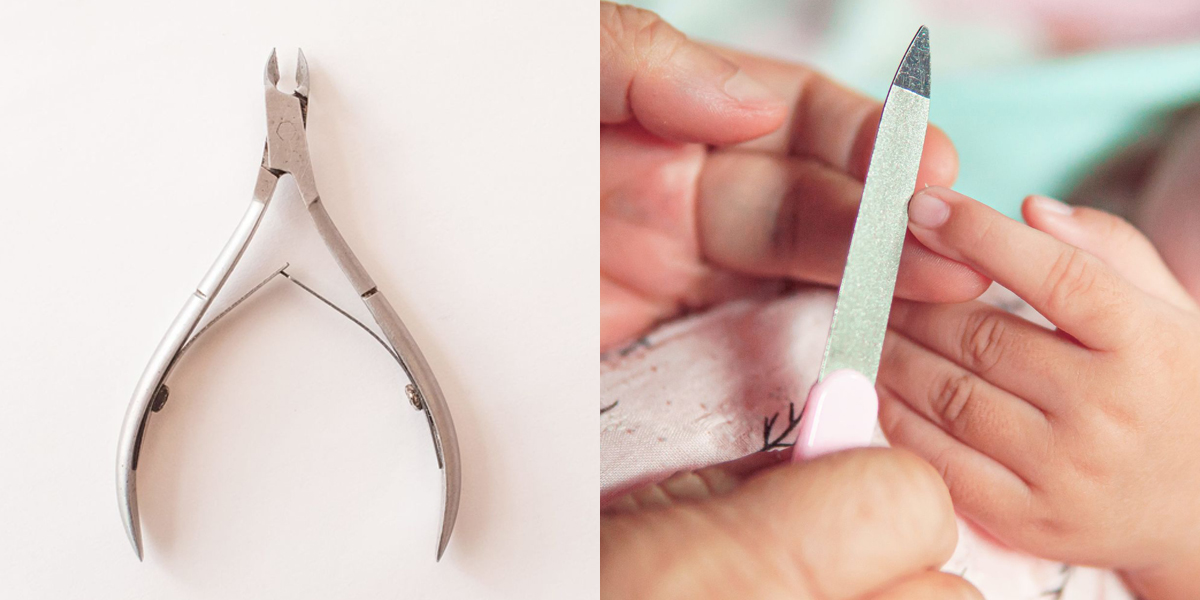
Helpful hints
- Nails are much easier to cut after a bath or shower as they tend to be softer. Cleaning your hands before cutting them helps maintain good hand hygiene.
- Find a safe and comfortable position. Ensure the arm is supported.
- Ensure you are in a well-lit area.
Do:
Hold the hand with one hand and the nippers with the other, start at one side of the fingernail and gently cut across to the other side following the natural line of the fingernail.
Use the file/emery board to file the nails, preventing any jagged or rough edges being left behind. Always file in the same direction, away from the body.
Once completed, check between the infers to remove any nail debris.
If you accidently cause a bleed, firmly apply pressure to the area with some gauze or similar product for a couple of minutes. Check the bleeding has stopped then apply a dry dressing.
When you have an injured or loose nail, cut it back to where it is still attached as this will help it grow back normally.
Don't:
Do not cut your nails if you cannot do so comfortably or safely. You may find it easier to file your fingernails twice weekly to prevent the need for cutting them or to ask a family member to do it for you.
Do not be tempted to cut down the side of the nail or to cut a V shape in the nail as this can cause problems.
Do not clean underneath your nails with sharp objects.
Nail cutting course
NAilS IT! (World for You Care Therapy) provides nail cutting and care courses, aimed at carers and nurses.
Further information and resources
Nail Carer case study
A case study from Birmingham Community Healthcare NHS Foundation Trust about skills for healthcare:
Elderly nail care – hand and foot
The Wheelchair Pro Blog has developed advice on elderly nail care:
Policy regarding nail care
Learn more about how finger and toenail care are regulated under the Health and Social Care Act 2008 and Regulations 2014:
Related services
Care Home Support Team
Support and training for care home staff to improve the wellbeing of residents.
Care Home Support Team: Go to servicePodiatry Service
Care for foot health issues that may affect mobility, such as wounds, infections, ingrown toenails, and structural abnormalities.
Podiatry Service: Go to service