

About the condition
Osteoarthritis is an age-related condition that can cause joints to become painful and stiff. It is the most common type of arthritis in the UK.
As part of the normal aging process and through normal living our joint are exposed to stress. For some this doesn’t cause any symptoms, but for others these normal age-related changes produce pain and stiffness, and we would call this osteoarthritis.
This can sometimes cause pain, swelling and difficulty moving the joint.
Signs and symptoms
Osteoarthritis affects people in different ways, but more often it develops over many years as part of the normal aging process.
Symptoms of osteoarthritis include:
- pain at the base of the thumb, especially with gripping and/or pinching activities
- stiffness after periods of rest / sleep
- swelling or deformity of the joint
- aching after a period of prolonged use
- loss of strength in gripping and/or pinching activities
- decreased range of movement of the thumb
Treating osteoarthritis of the thumb
Recovery involves easing the symptoms and maintaining movement and strength around your thumb and hand. Consider the following to help manage your symptoms.
- Relative rest (limiting activities and taking regular breaks) may help reduce your pain, as well as changing the position of your hand when gripping, pinching, wringing, or twisting.
- Wearing a thumb-spica splint may ease your pain by limiting the movement of your thumb during repetitive aggravating activities.
- Applying heat (for example, hot water bottle) or cold (for example, a bag of frozen peas wrapped in a damp tea-towel) to the tender area for 10 minutes twice a day can help reduce pain. Please don’t do this if your skin sensation is impaired.
- Use aids such as jar openers or kettle tippers to help reduce stress on your thumb.
- Take your time – do activities in smaller parts and take regular breaks.
- Anti-Inflammatory tablets and gels can help reduce your painful symptoms. Please talk to your GP or pharmacist for further advice.
Medication
Anti-inflammatory tablets and gels can help reduce your painful symptoms. Please talk to your GP or pharmacist for further advice.
Exercises
Complete these gentle exercises little and often to help reduce stiffness and other symptoms. They may be uncomfortable, but they should not significantly increase your symptoms.
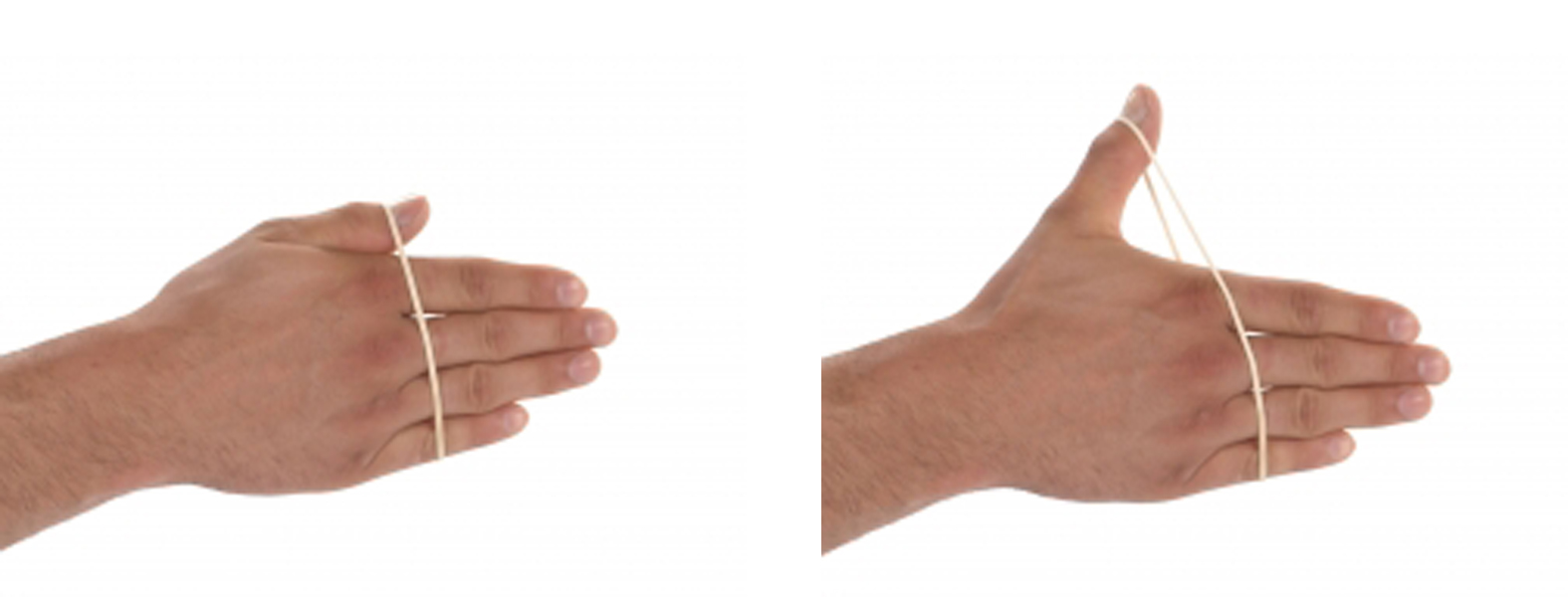
1. Thumb extension
Place an elastic band around your thumb and fingers.
Pull thumb sideways against the elastic.
Return to the start position and repeat.
2. Active thumb abduction
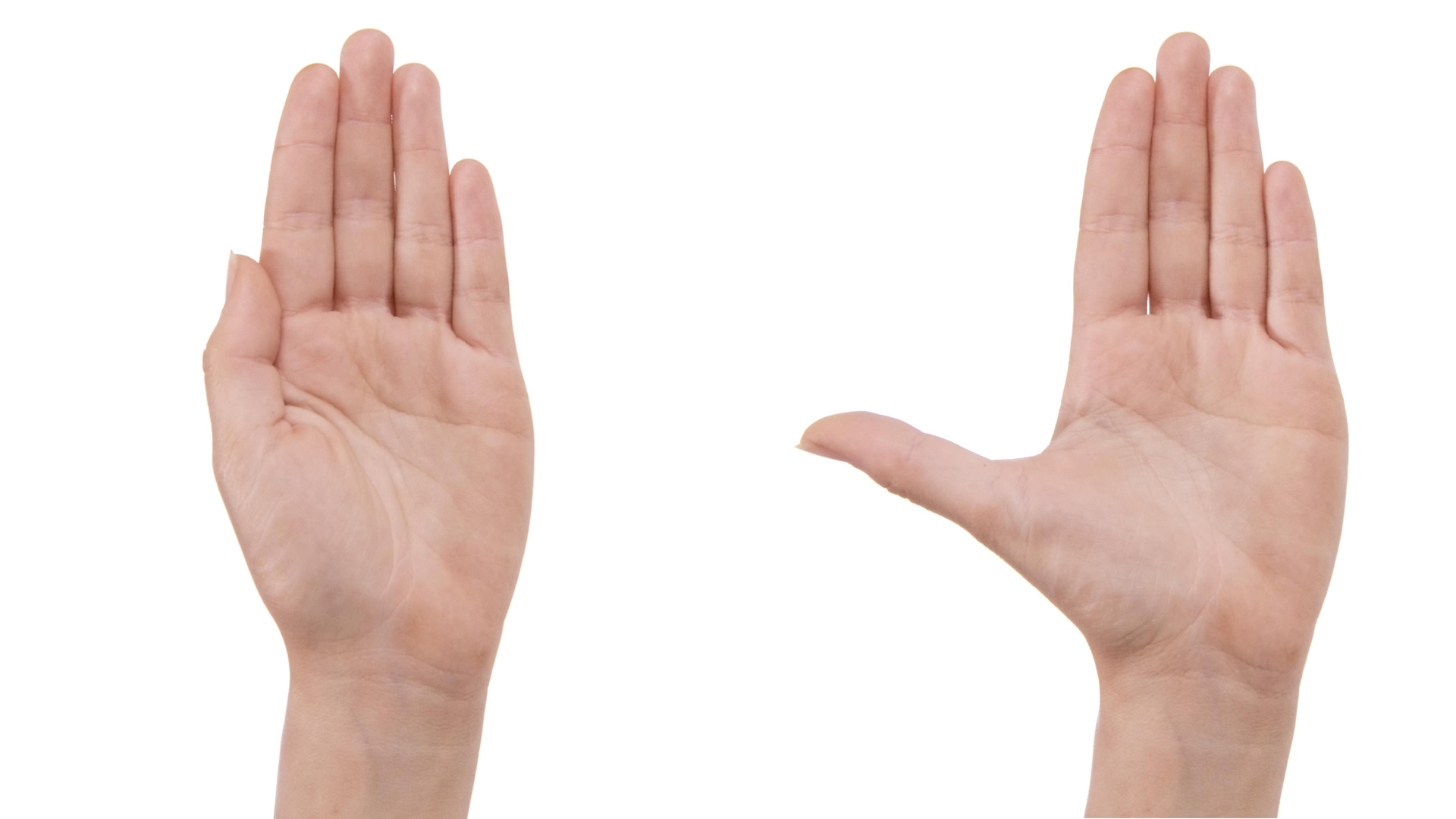
Align your thumb with your index finger and then bring it straight up and away from your palm.
Relax your thumb.
3. Thumb opposition
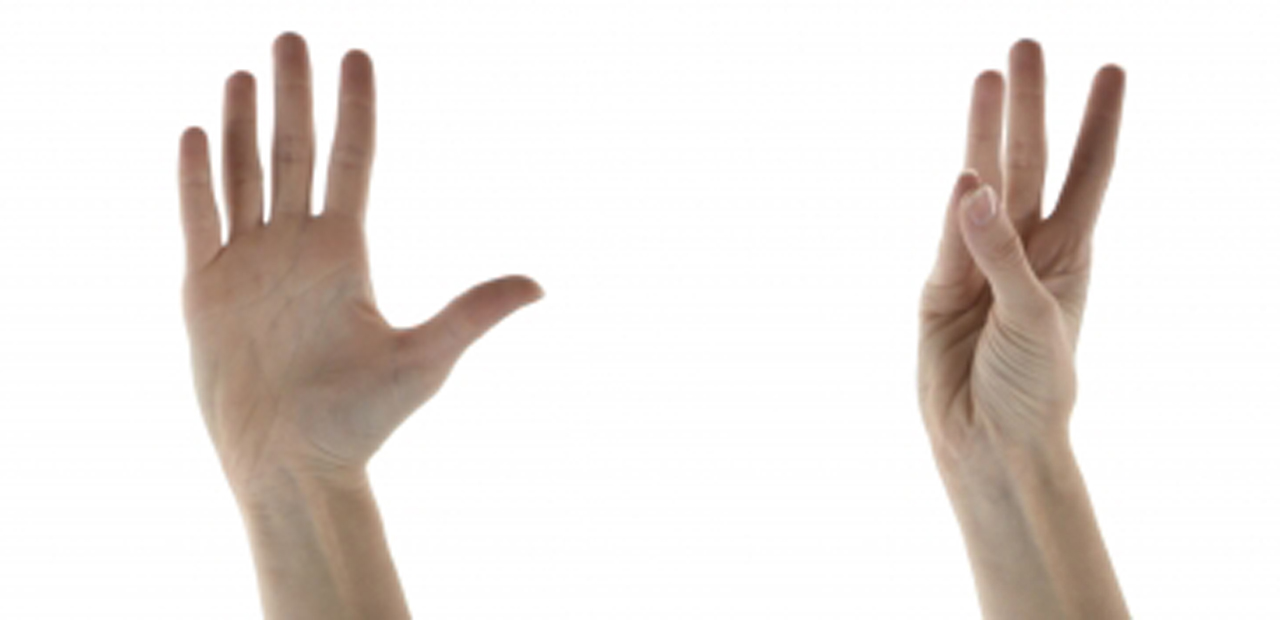
Touch your thumb to your little finger, then stretch your thumb outward to form an 'L' with your hand.
Repeat with the same with the other fingers.
When to seek help
If you feel these exercises are making your symptoms worse, take a break. You can also speak to your GP for further help. This doesn’t mean it’s anything too serious. It may be that you need some extra help to deal with the symptoms, and you may be referred to a physiotherapist.
Related services
Musculoskeletal Physiotherapy Outpatients
Treatment plans to manage or improve musculoskeletal conditions, including chronic pain, recovery from surgery, and osteoarthritis.
Musculoskeletal Physiotherapy Outpatients: Go to serviceCommunity Physiotherapy Service (East Berkshire)
Support at home for housebound adults who are unable to attend clinic appointments, including a personalised rehabilitation plan.
Community Physiotherapy Service (East Berkshire): Go to serviceTalking Therapies
A free and confidential service offering effective treatment for common mental health problems such as low mood, stress or worry.
Talking Therapies: Go to service