

About the condition
Thoracic (mid-back) pain affects the mid‑back, between the base of the neck and the bottom of the ribcage.
It is less common than neck or lower back pain and may come on gradually or after an activity, twist, lift, fall, or sports movement. The good news is that the thoracic spine is strong, and most people improve with simple self‑management.
Mid-back pain can occur with whiplash, which happens when the head is suddenly forced forwards, backwards, or sideways, stretching the soft tissues of the neck. Read our information sheet on whiplash if you think this might be the cause of your pain.
Signs and symptoms
Symptoms can last weeks to months, depending on things like activity levels, stress, general health, and lifestyle.
- Aching or sharp pain in the mid‑back, often between the shoulder blades.
- Stiffness, especially when twisting, bending, or first thing in the morning.
- Muscle tightness or spasms around the upper back and shoulder blades.
- Pain with certain movements, lifting, reaching, or sitting too long.
- Pain spreading into the ribs or around the chest wall.
- Postural discomfort that improves with moving or stretching.
Red flag symptoms
Seek urgent medical help by contacting NHS 111, going to A&E, or making an emergency GP appointment if you have:
weakness, numbness, or tingling in both legs
difficulty walking, feeling unsteady, or legs giving way
numbness or tingling around the genitals, buttocks, or inner thighs
loss of bladder or bowel control (wetting or soiling yourself)
difficulty passing urine
new sexual dysfunction, such as loss of genital sensation or difficulty maintaining an erection
weight loss, severe constant pain, night pain and feeling generally unwell
Exercises
Complete these gentle exercises little and often to help reduce spinal stiffness and other symptoms. They may be uncomfortable, but they shouldn’t significantly increase your symptoms.
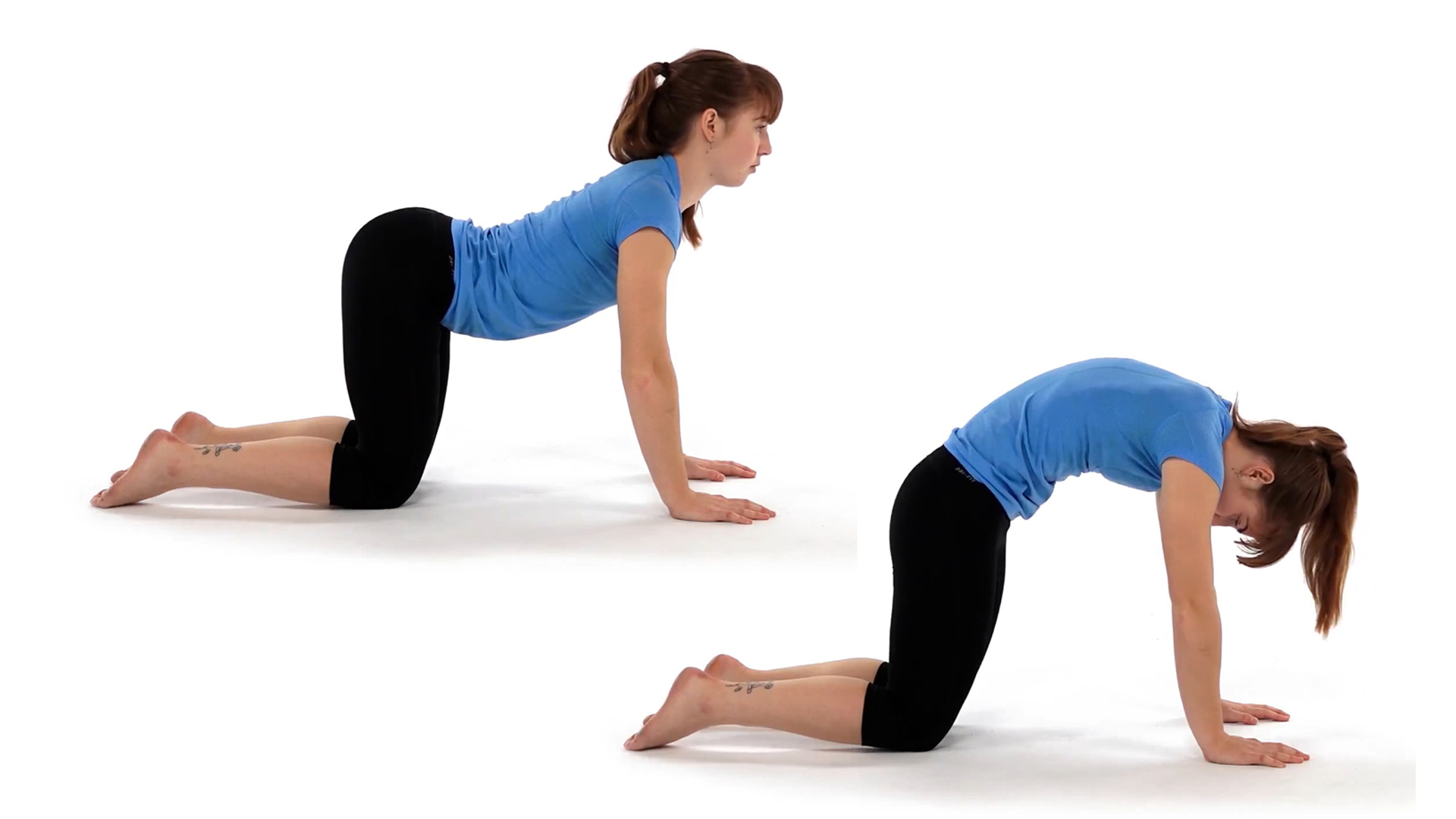
1. Cat and dog stretch
Repetitions: 10-20
Frequency: 2-3 times daily
Start on all fours with your hands under your shoulders and knees under your hips.
Cow: Inhale, let your tummy drop, gently arch your back, and lift your head.
Cat: Exhale, round your back, and tuck your chin toward your chest.
Move slowly between the two positions.
2. Trunk rotation
Repetitions: 10-20
Frequency: 2-3 times daily
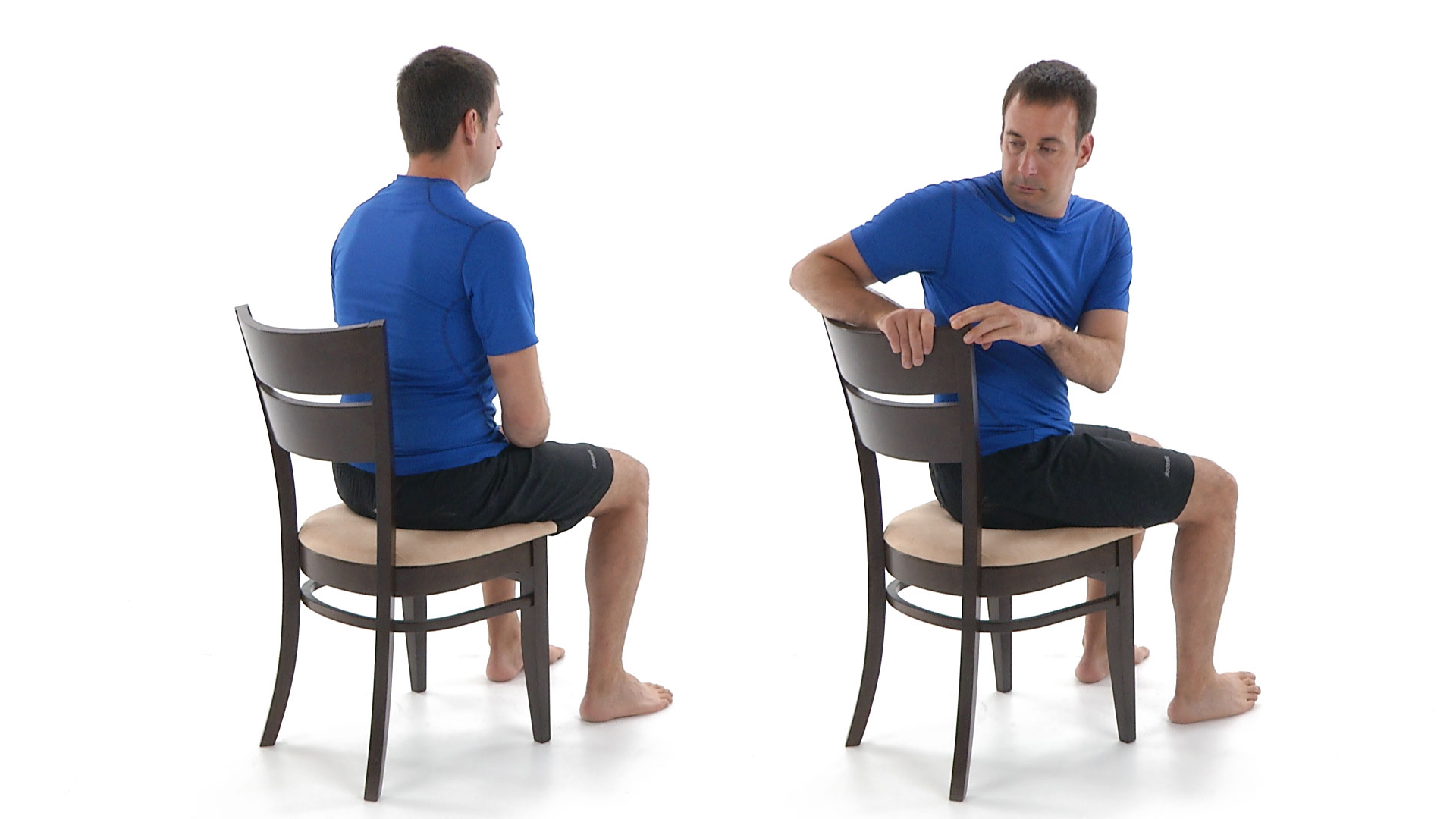
Sit on a chair with your back in a neutral position (slightly arched) and your chin gently tucked.
Turn your upper body to one side, rotating from the mid-back, not the lower back.
You can increase the stretch by lightly pulling on the back of the chair.
Return to the starting position and repeat on both sides.
3. T-spine flex./ext.
Repetitions: 10-20
Frequency: 2-3 times daily
Stand up and lower into a mini-squat, keeping your body relaxed.
Use gentle momentum to swing your arms up overhead.
As your arms rise, straighten your legs and lean back slightly to bring your body into extension.
Move smoothly and comfortably.

4. Side bending stretch
Repetitions: 10-20
Frequency: 2-3 times daily
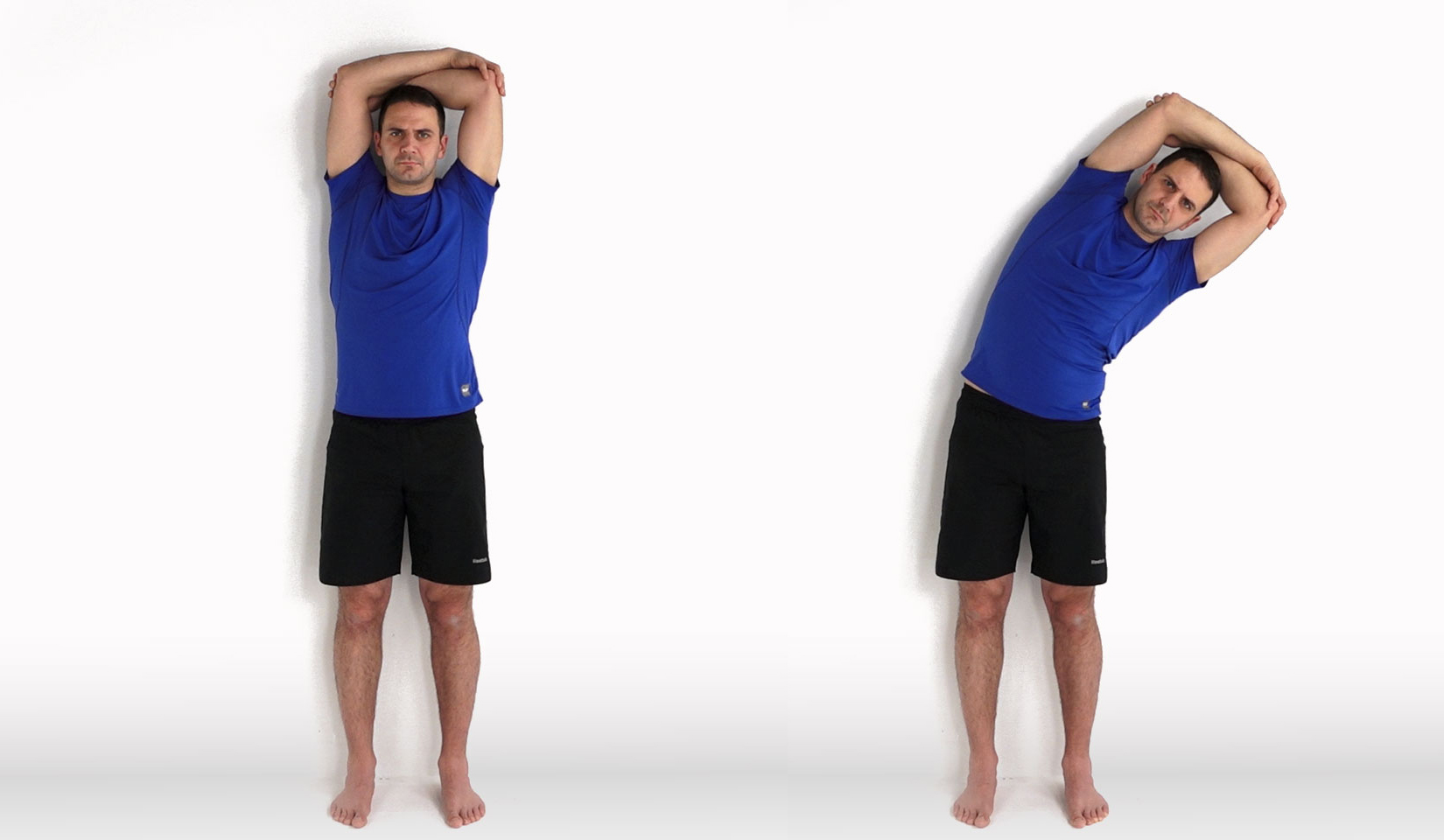
Stand with your back against a wall, feet hip-width apart.
Lift your arms overhead and hold each elbow with the opposite hand.
Gently side-bend your upper body to one side, moving from the thoracic (mid-back) rather than the waist.
Return to the centre and repeat on the other side.
When to seek help
If you feel these exercises are making your symptoms worse, take a break. You can also speak to your GP for further help. This doesn’t mean it’s anything too serious. It may be that you need some extra help to deal with the symptoms, and you may be referred to a physiotherapist.
Related services
Musculoskeletal Physiotherapy Outpatients
Treatment plans to manage or improve musculoskeletal conditions, including chronic pain, recovery from surgery, and osteoarthritis.
Musculoskeletal Physiotherapy Outpatients: Go to serviceCommunity Physiotherapy Service (East Berkshire)
Support at home for housebound adults who are unable to attend clinic appointments, including a personalised rehabilitation plan.
Community Physiotherapy Service (East Berkshire): Go to serviceTalking Therapies
A free and confidential service offering effective treatment for common mental health problems such as low mood, stress or worry.
Talking Therapies: Go to service