

Overview
Also known as 'tennis elbow', lateral elbow tendinopathy is classified as an overuse injury of the tendons on the outside of the elbow.
Anybody can get lateral elbow tendinopathy, but it is most common in people between the ages of 35 and 54. When a person gets this problem, one or more of the tendons in their elbow become painful.
The pain occurs at the point where the tendons of the forearm muscles attach to the bone.
Although lateral elbow tendinopathy is painful, it normally recovers; 80-90% self resolve over 1-2 years.
Signs and symptoms
The main symptom of lateral elbow tendinopathy is pain and tenderness on the outside of the elbow. Some people may feel pain travelling down the forearm.
Symptoms can be worse with twisting movements, such as turning a door handle or opening the lid of a jar, you may also feel pain and stiffness on waking.
Different people will experience varying degrees of pain, ranging from mild discomfort when using the arm to a severe ache.
Causes
Lateral elbow tendinopathy is thought to be caused by sensitivity of the forearm tendons due to overuse. Any new or excessive activity that involves gripping or twisting can lead to this problem.
Common causes include:
- manual work that involves repetitive turning or lifting of the wrist such as plumbing, bricklaying, gardening, or DIY
- repetitive, fine movements of the hand and wrist such as typing or using scissors
- playing racket sports, such as squash or tennis (less than 10% of cases)
- sports that involve throwing, such as cricket or bowls
Treating lateral elbow tendinopathy
Initial treatment focuses on reducing irritation in the tendon.
Helpful tips include:
- Avoid or reduce painful activities or try doing them in a different way
- A tennis elbow strap may help ease pain
- Pain relief: Anti‑inflammatory tablets, gels, or simple painkillers may help. Speak to your GP or pharmacist for advice
- Heat or ice: use a warm pack or apply an ice pack (e.g., frozen peas wrapped in a damp tea towel) to the sore area for 10 minutes, up to twice a day. Do not use ice if you have reduced skin sensation and never apply ice directly to the skin.
- Apply ice in a damp tea towel (15 mins three times per day).
Exercises
Complete these gentle exercises little and often to help reduce stiffness and other symptoms. They may be uncomfortable, but they should not significantly increase your symptoms.
Isometric exercises
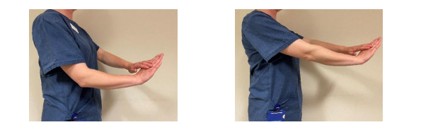
Keep your wrist still in one position while gently pressing against it with your other hand. Don’t let the wrist move. To progress, add a little more pressure or reach slightly forward and backward from your shoulder or elbow while keeping the wrist steady.
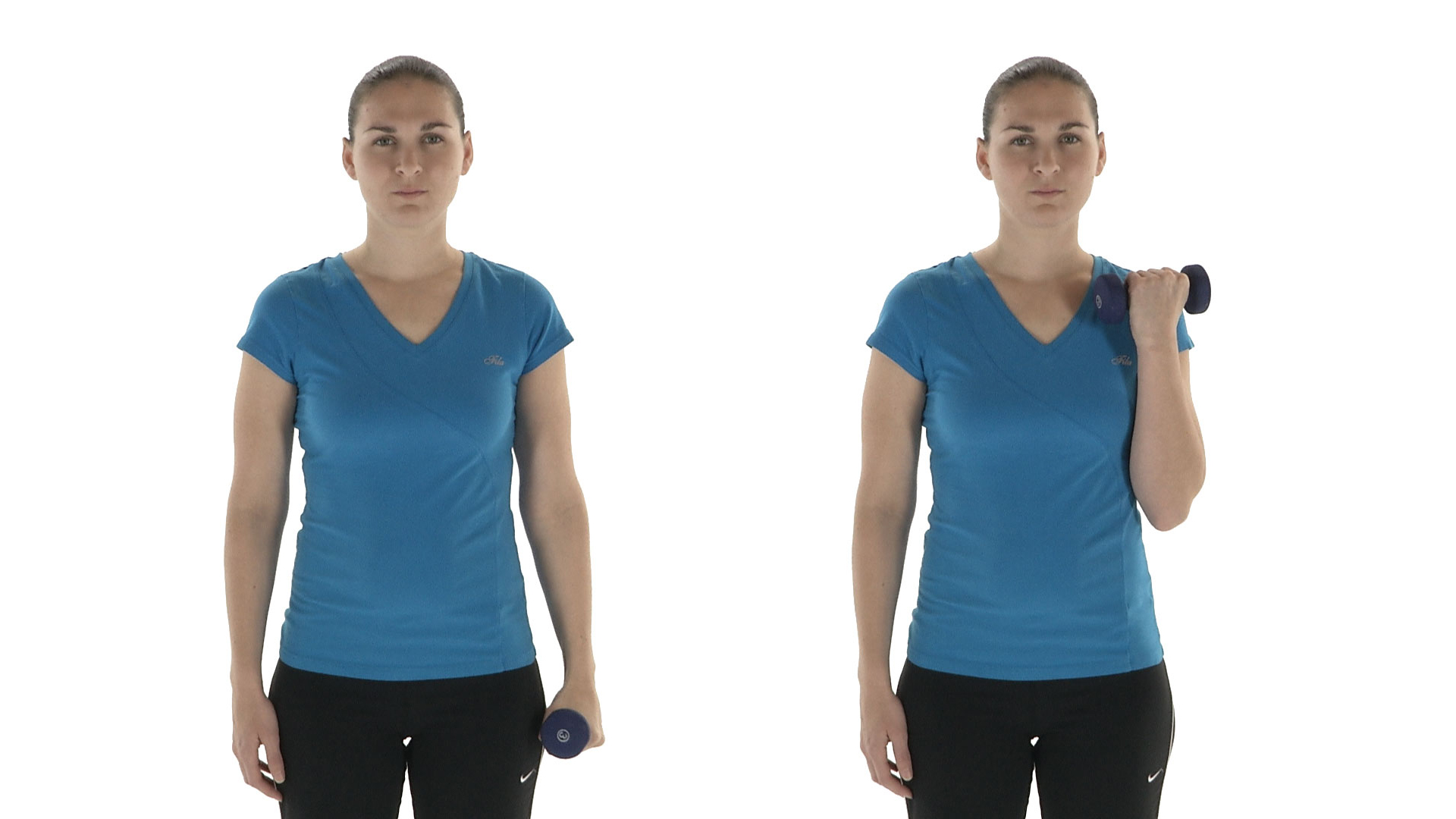
Eccentric exercises (elbow flexion with dumbbell)
This time, using a light weight, lower your hand down by your side with your palm facing down. Bend your elbow again but with your palm facing up.
When to seek help
If you feel these exercises are making your symptoms worse, take a break. You can also speak to your GP for further help. This doesn’t mean it’s anything too serious. It may be that you need some extra help to deal with the symptoms, and you may be referred to a physiotherapist.
Related services
Musculoskeletal Physiotherapy Outpatients
Treatment plans to manage or improve musculoskeletal conditions, including chronic pain, recovery from surgery, and osteoarthritis.
Musculoskeletal Physiotherapy Outpatients: Go to serviceCommunity Physiotherapy Service (East Berkshire)
Support at home for housebound adults who are unable to attend clinic appointments, including a personalised rehabilitation plan.
Community Physiotherapy Service (East Berkshire): Go to servicePhysiotherapy Service for children and young people
Help for children and young people up to the age of 19 who have difficulties with gross motor skills, including posture and mobility.
Physiotherapy Service for children and young people: Go to service