

About the condition
De Quervain’s tendinopathy causes pain on the thumb side of your wrist. It happens when the covering around the tendons that move your thumb becomes irritated.
This can be very sore but is not harmful, and most people recover with simple treatment.
It is most common in adults aged 30–55, and more common in women – especially those caring for a young baby.
Signs and symptoms
- Pain and tenderness on the thumb side of the wrist.
- Pain may spread into the thumb or up the forearm.
- Pain worse with gripping, pinching, twisting, or lifting.
- Clicking or grating sensations (not harmful).
Causes
The exact cause isn’t known, but it is often linked to repetitive thumb and wrist movements, such as:
- lifting a baby
- DIY or gardening
- sports like skiing
Treating De Quervain’s tendinopathy
- Relative rest: Reduce or change the activities that make your pain worse. Take regular breaks and avoid repeated gripping or twisting.
- Splinting: A thumb‑spica splint can help rest your thumb and reduce pain during daily tasks.
- Heat or cold: Use heat (e.g. hot water bottle) to relax the area. Use ice (e.g. frozen peas wrapped in a tea towel) for 10 minutes twice a day to ease pain. Avoid if you have reduced sensation. Don’t apply ice directly to the skin.
- Pain relief: Anti‑inflammatory tablets or gels (like ibuprofen) may help. Speak to your GP or pharmacist for advice.
- Physiotherapy: A physiotherapist can help you identify what’s aggravating your symptoms and guide you through exercises when your pain settles.
- Hand clinic: You may be referred for specialist support if needed.
- Steroid injection: If symptoms don’t improve, a steroid injection at the base of the thumb may reduce pain. The effect may be temporary, and continuing irritating activities can delay recovery.
Exercises
Improving the load tolerance through the thumb tendons can help the pain. Please try these exercises at home.
Build these exercises up gradually. Pain levels of up to 4/10 that settles quickly after your exercises is acceptable.
Tendon-related pain often benefits from increased rest periods, and it is recommended that you have at least one day off between doing exercise to avoid aggravating symptoms.
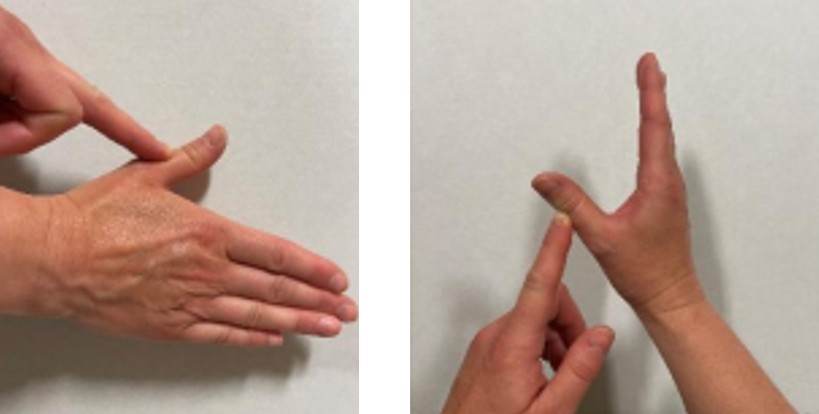
1. Thumb push and hold
Frequency: 3 times daily
Resist two different thumb movements:
a) Thumb up
b) Thumb away from palm
You can resist these movements with your other finger and hold for 30 seconds.
2. Thumb push elastic band
Frequency: 3 times daily
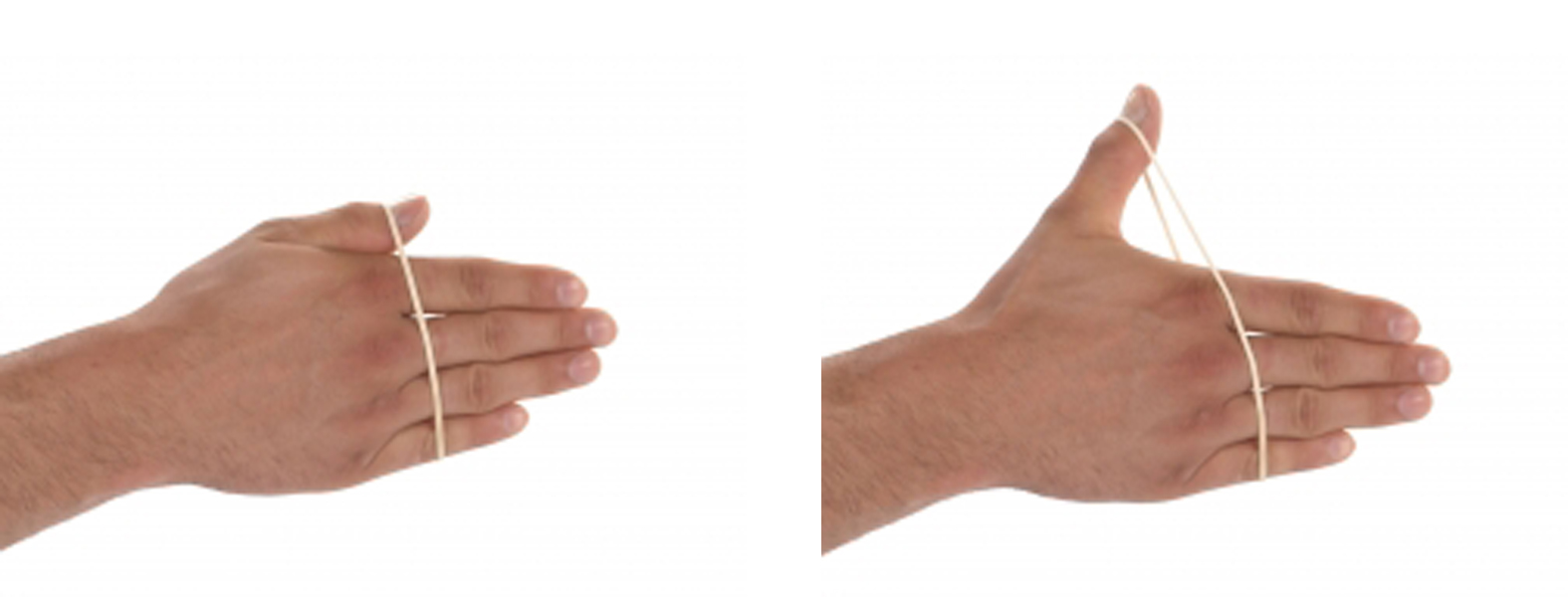
Place an elastic band around your thumb and fingers.
Pull the thumb upwards and then outwards/sideways against the elastic hold for 30 secs.
If no pain with the above, try progressing to pulling up and down slowly against the elastic for 8 repetitions, 3 times during the day, every other day.
When to seek help
If you feel these exercises are making your symptoms worse, take a break. You can also speak to your GP for further help. This doesn’t mean it’s anything too serious. It may be that you need some extra help to deal with the symptoms, and you may be referred to a physiotherapist.
Related services
Musculoskeletal Physiotherapy Outpatients
Treatment plans to manage or improve musculoskeletal conditions, including chronic pain, recovery from surgery, and osteoarthritis.
Musculoskeletal Physiotherapy Outpatients: Go to serviceCommunity Physiotherapy Service (East Berkshire)
Support at home for housebound adults who are unable to attend clinic appointments, including a personalised rehabilitation plan.
Community Physiotherapy Service (East Berkshire): Go to serviceTalking Therapies
A free and confidential service offering effective treatment for common mental health problems such as low mood, stress or worry.
Talking Therapies: Go to service