

About the condition
Cervicogenic headaches may be caused by pain from the joints and muscles in your neck. They often start on one side of your neck and move into your head.
While painful, most are not serious and can improve with simple changes and exercises.
Signs and symptoms
Headaches are very common, affecting 90% of the population at some point in their lives. About 15-20% of these are cervicogenic headaches.
Symptoms of cervicogenic headaches may include:
- commonly one-sided neck/head pain
- headaches caused by moving your neck
- feeling pain, pressure or stiffness at the top of your neck or bottom of your head
- having trouble moving your head or neck
- pain on one side of your neck, shoulder, or arm
Red flag symptoms
If you’ve had a recent head injury which is causing headaches, or you’re having the following symptoms, please contact your GP.
Feeling light-headed or dizzy.
Difficulty talking or swallowing.
Worsening headaches, despite painkillers.
Sudden fainting, nausea, or vomiting.
Numbness or tingling on your face.
Double vision or sudden change in your vision.
Treating cervicogenic headaches
Symptoms can improve in a few months, but treatment and a full recovery can take time.
What can help?
- Regular movement or exercise – Try gentle daily movement like walking or gardening, or more intense exercise if you enjoy this.
- Rest and activity changes – Avoid repetitive bending, strong gripping, or vibrating tools. Take breaks and alternate heavy tasks with lighter ones.
- Check your desk setup – Keep keyboard and mouse close and at elbow height. Rest forearms lightly and keep wrists straight. Take regular breaks from your screens.
- Pain relief – Paracetamol or ibuprofen can help short‑term pain (follow GP or label advice). Heat packs can also help.
- Stress management – Consider mindfulness apps, such as Headspace or Calm.
- Eye check – Consider making sure your eyes are not playing
a part in your headaches.
Exercises
Complete these gentle exercises little and often to help reduce spinal stiffness and other symptoms. They may be uncomfortable, but they shouldn’t significantly increase your symptoms.
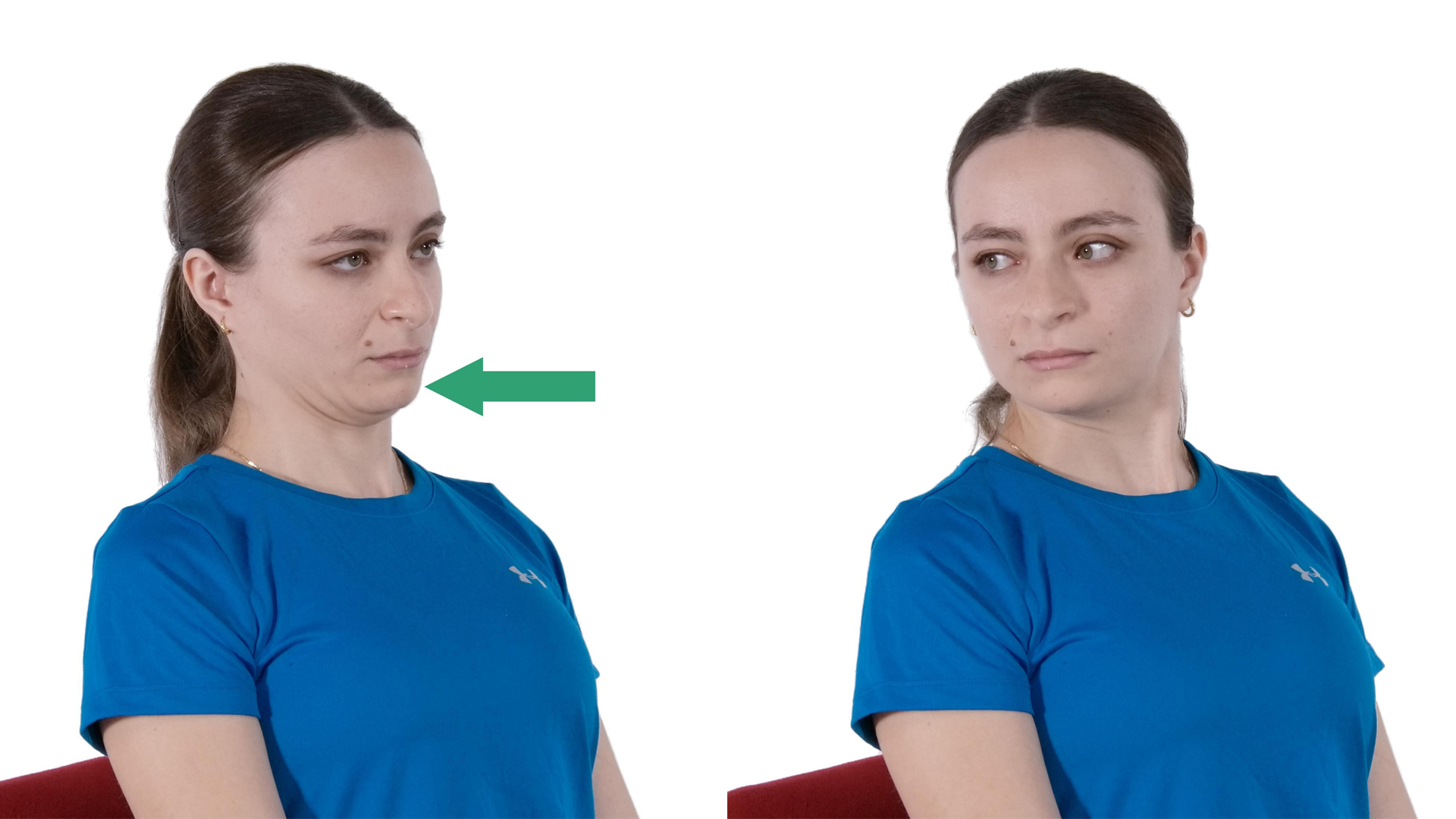
1. Neck rotation
Repetitions: 10-20
Frequency: 2 times daily (morning and afternoon)
Stand or sit tall and gently draw your chin straight back (keeping your eyes looking forward).
Slowly turn your head as far as comfortable while keeping your chin tucked in.
Return to the middle and repeat.
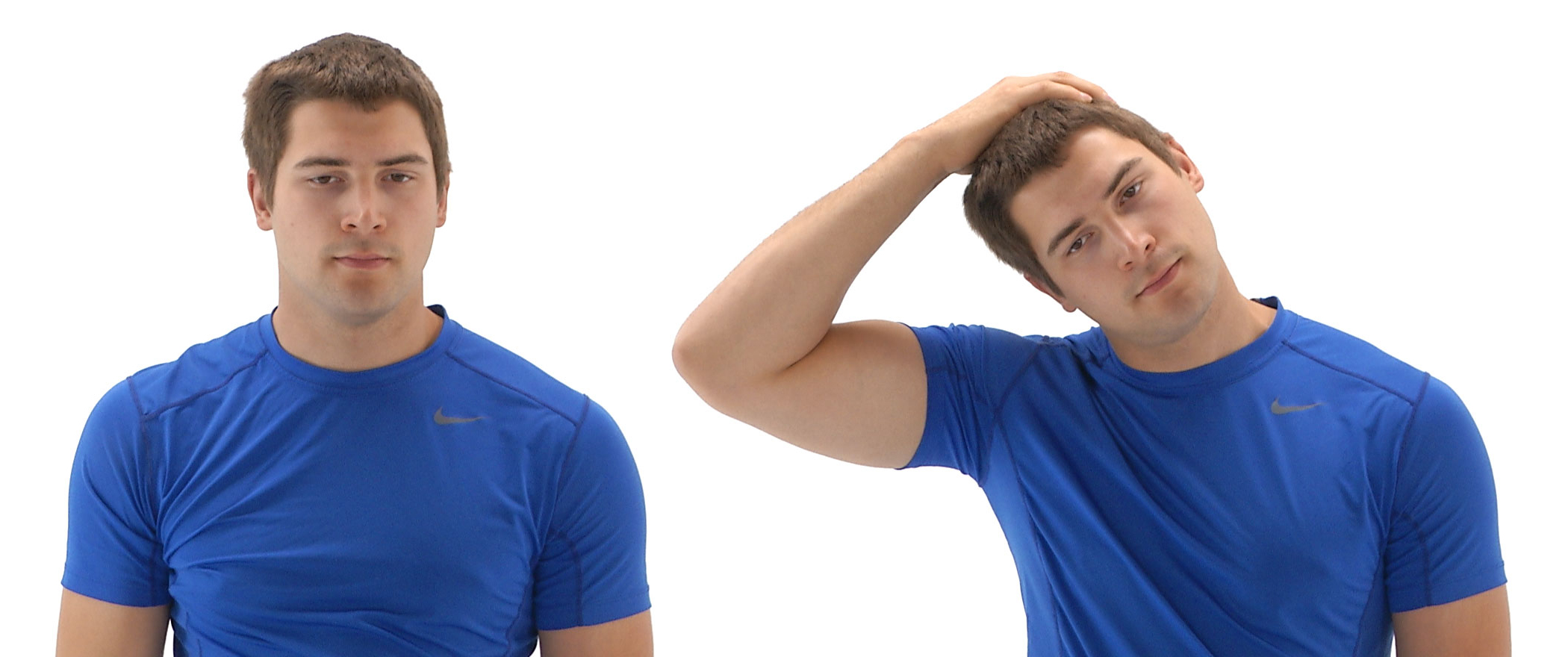
2. Side neck stretch
Repetitions: 10-20
Frequency: 2 times daily (morning and afternoon)
Sit or stand tall.
Lift one arm and gently bring it over your head, placing your hand on the opposite side of your head.
Gently pull your head toward your shoulder until you feel a stretch on the other side of your neck.
Hold the stretch.
Keep your head level – don't turn it or tilt it forward or backward.
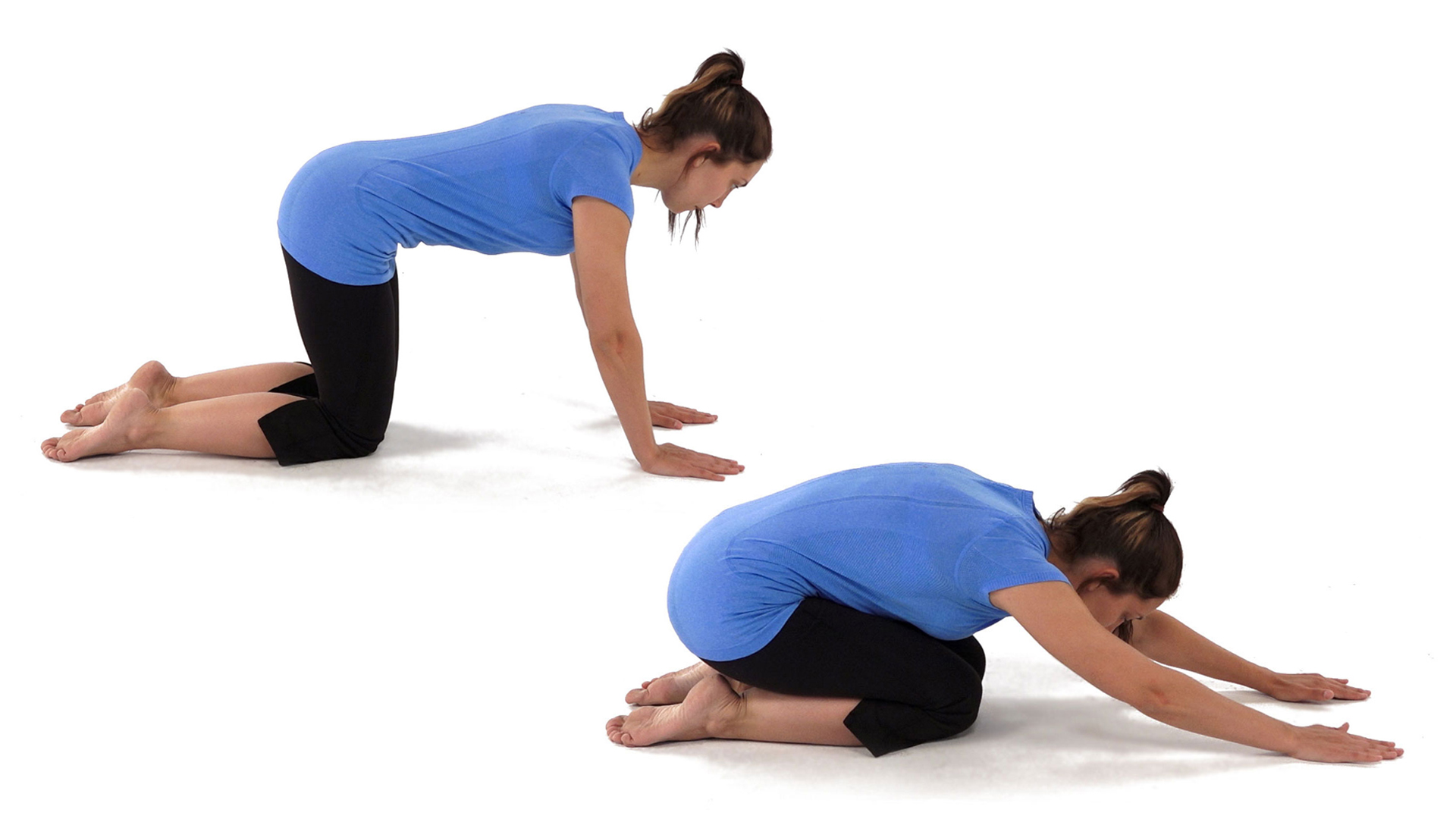
3. Upper body stretch
Repetitions: 10-20
Frequency: 2 times daily (morning and afternoon)
Kneel on the floor and sit your hips back toward your heels.
Gently lower your chest toward the ground and stretch your arms forward.
Let your head relax down.
Breathe deeply and hold the position for as long as comfortable.
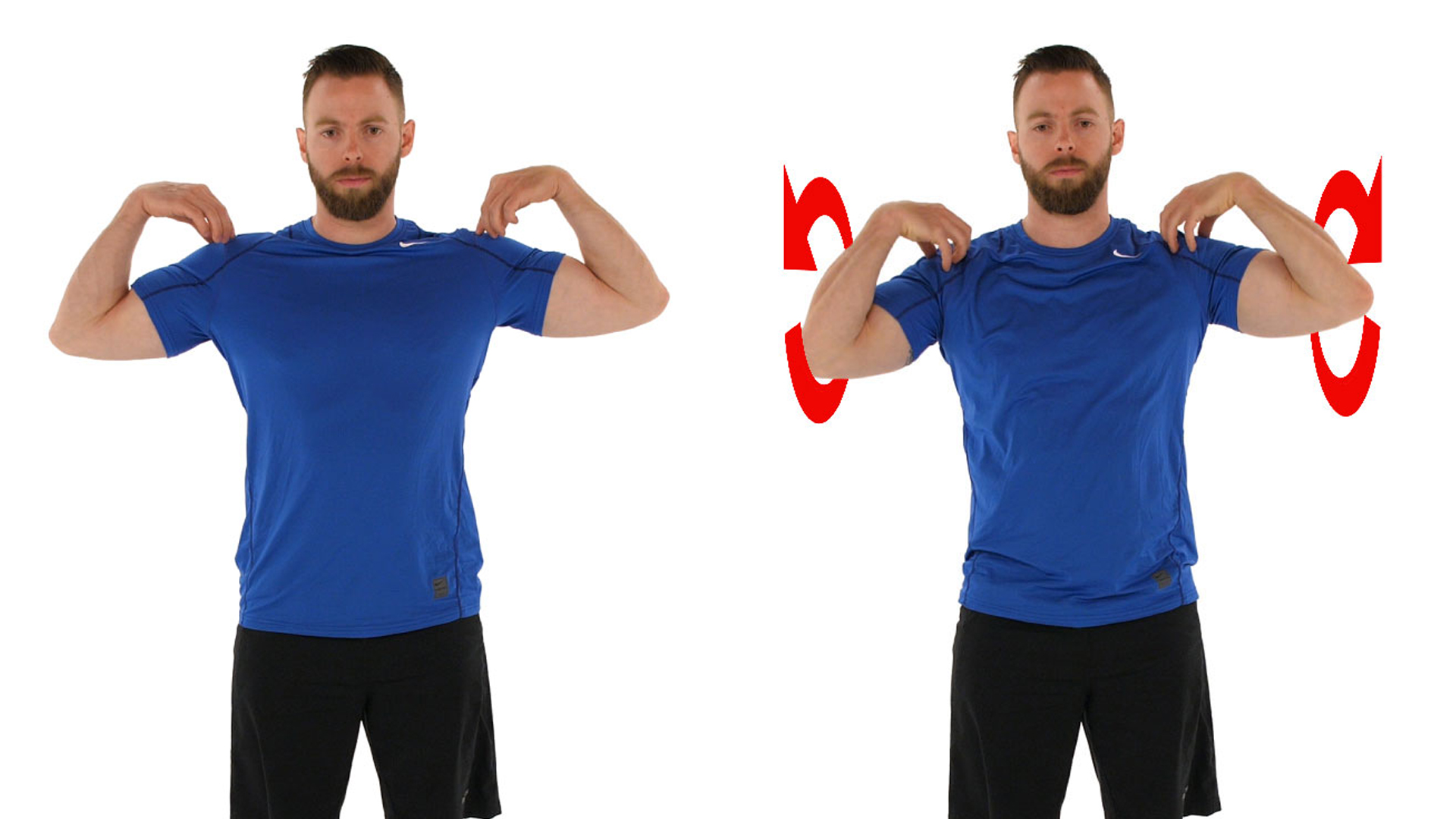
4. Shoulder circumduction
Repetitions: 10-20
Frequency: 2 times daily (morning and afternoon)
Stand or sit straight and place your hands on your shoulders.
Move your elbows up, in, out, and down in order to make circles with your elbows that are as large as possible.
Lower your arms and repeat.
When to seek help
If you feel these exercises are making your symptoms worse, take a break. You can also speak to your GP for further help. This doesn’t mean it’s anything too serious. It may be that you need some extra help to deal with the symptoms, and you may be referred to a physiotherapist.
Related services
Musculoskeletal Physiotherapy Outpatients
Treatment plans to manage or improve musculoskeletal conditions, including chronic pain, recovery from surgery, and osteoarthritis.
Musculoskeletal Physiotherapy Outpatients: Go to serviceCommunity Physiotherapy Service (East Berkshire)
Support at home for housebound adults who are unable to attend clinic appointments, including a personalised rehabilitation plan.
Community Physiotherapy Service (East Berkshire): Go to serviceTalking Therapies
A free and confidential service offering effective treatment for common mental health problems such as low mood, stress or worry.
Talking Therapies: Go to service