



As the warmer weather encourages more of us to be out and about enjoying the great outdoors, be aware of where ticks are found and how to remove them safely and quickly.
It's important to know what to do as some tick bites can result in infections such as Lyme disease.
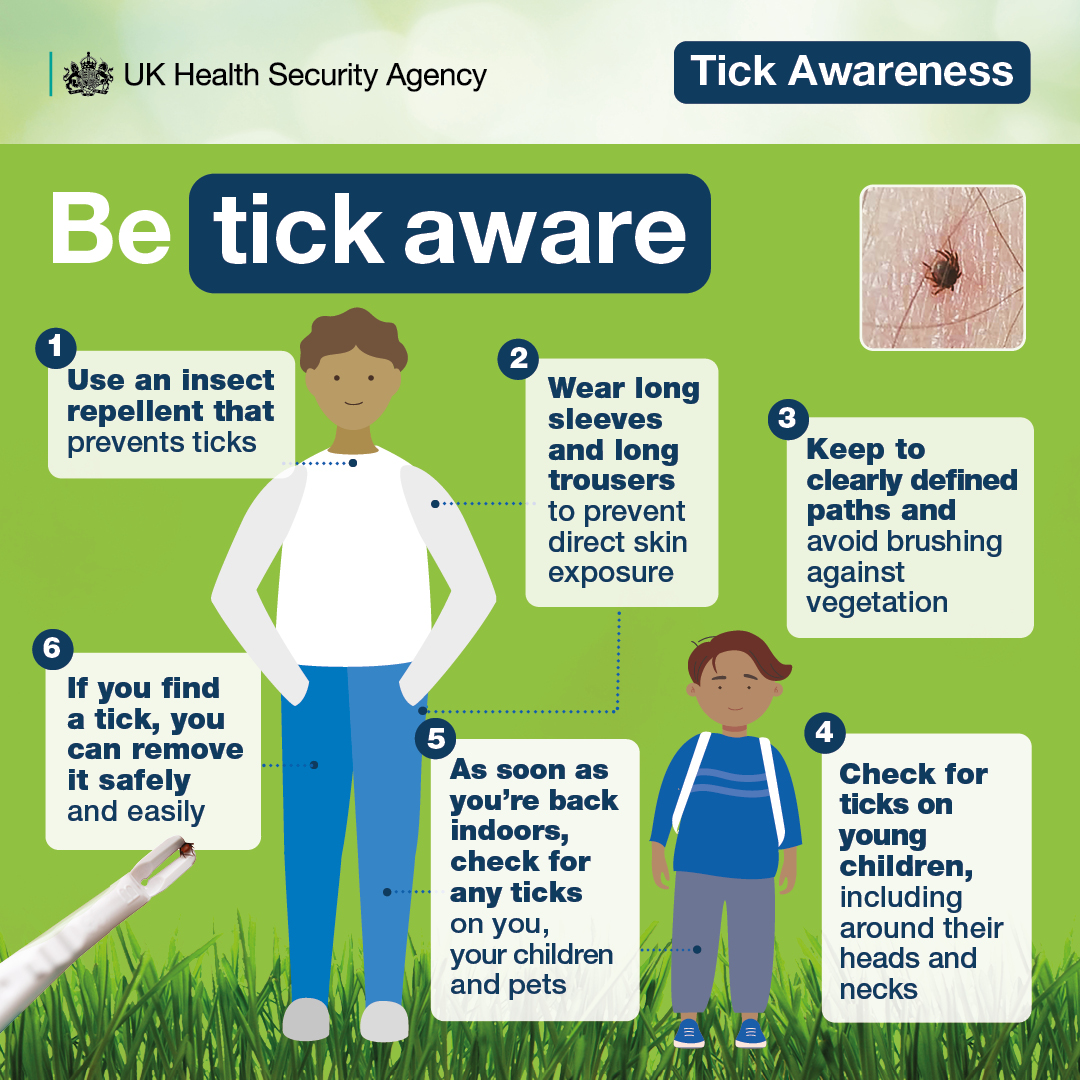
Be tick aware
- Use an insect repellent that prevents ticks.
- Wear long sleeves and long trousers to prevent direct skin exposure.
- Keep to clearly defined paths and avoid brushing against vegetation.
- Check for ticks on young children, including around their heads and necks.
- As soon as you're back indoors, check for any ticks on you, your children, and your pets.
- If you find a tick, you can remove it safely and easily.
Peak tick season in the UK usually lasts from March to October, with most bites commonly reported during May and June. However, ticks can be active all year round.
Read the UK Health Security Agency (UKHSA) blog posts about ticks and Lyme disease and 'be tick aware':